Psychology Facts That Improve Mental Health
Discover powerful psychology facts that shape mental health, behavior, and emotions. Learn science-backed insights to improve your well-being today!
3/27/20263 min read
🧠 Mental Health & Psychology Facts That Can Change Your Life
Understanding psychology is essential for improving mental health, emotional resilience, and overall well-being. While many people focus on physical health, the science of psychology reveals how thoughts, emotions, and behaviors are deeply interconnected.
In this article, we explore fascinating and evidence-based mental health and psychology facts that explain how your mind works. Backed by research in behavioral science, cognitive health, and emotional well-being, these insights will help you better understand yourself and make healthier life choices.
🧬 What Is Psychology and Why It Matters
Psychology is the scientific study of the mind and behavior. It helps explain how people think, feel, and act in different situations.
🧠 The Link Between Mind and Body
Modern psychology shows that mental and physical health are closely connected.
Chronic stress can weaken the immune system
Positive emotions can improve recovery and longevity
👉 This connection highlights why mental health is just as important as physical health.
😟 Stress and Its Psychological Impact
⚠️ Chronic Stress Changes the Brain
Long-term stress can physically alter brain structure and function.
Increases cortisol (stress hormone)
Affects memory and emotional regulation
📊 According to the World Health Organization (WHO), chronic stress contributes to major health conditions worldwide.
👉 Understanding stress is a key part of psychology and mental health awareness.
🧘 Relaxation Techniques Rewire the Brain
Practices like meditation and deep breathing can reduce stress.
👉 Research shows these habits improve brain plasticity—a core concept in psychology.
🧠 The Power of Thoughts and Cognitive Biases
🔄 Your Brain Uses Shortcuts (Cognitive Biases)
The brain simplifies decision-making using mental shortcuts.
Confirmation bias
Negativity bias
Availability heuristic
👉 These biases influence daily decisions without you realizing it.
💭 Negative Thinking Affects Health
Persistent negative thoughts can increase anxiety and depression.
👉 Cognitive-behavioral therapy (CBT), a widely used approach in psychology, helps reframe these patterns.
❤️ Emotions and Mental Health
😊 Emotions Are Biological Signals
Emotions are not just feelings—they are biological responses.
Fear triggers survival instincts
Happiness releases dopamine and serotonin
👉 Understanding emotions is central to psychology and emotional intelligence.
😢 Suppressing Emotions Can Be Harmful
Ignoring emotions may lead to increased stress and mental health issues.
👉 Healthy emotional expression is essential for well-being.
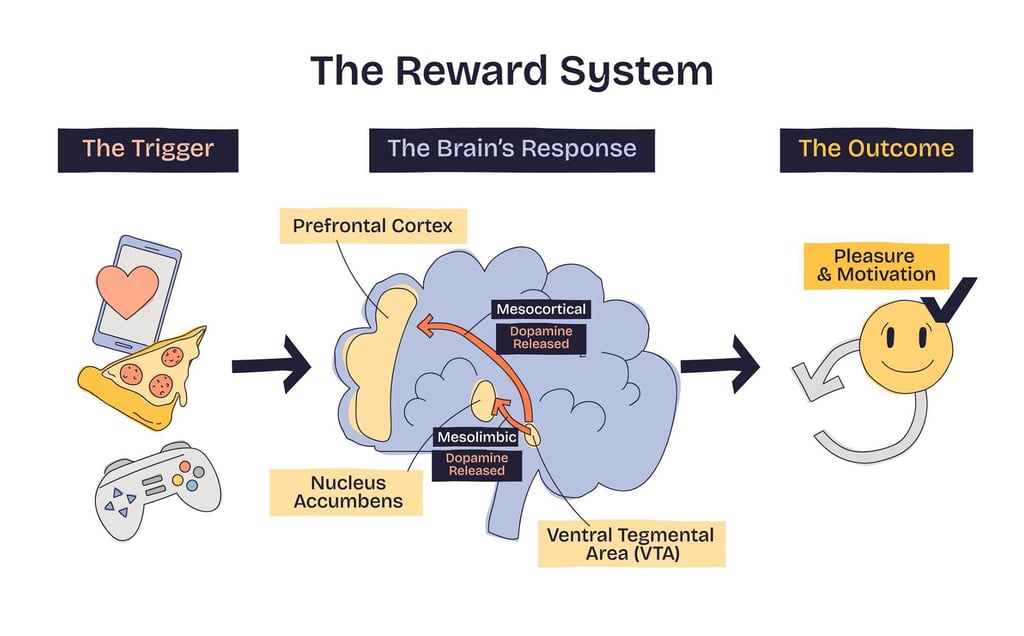
🧬 The Brain’s Reward System
🎯 Dopamine Drives Motivation
Dopamine is often called the “feel-good” chemical, but its main role is motivation.
Encourages goal-seeking behavior
Reinforces habits
👉 This explains addiction, productivity, and habit formation in psychology.
📱 Social Media Affects Brain Chemistry
Frequent social media use can overstimulate the reward system.
👉 This may lead to decreased attention span and increased anxiety.
💤 Sleep and Psychology Are Deeply Connected
😴 Sleep Impacts Mental Health
Lack of sleep can increase:
Anxiety
Depression
Irritability
📊 The CDC reports that insufficient sleep is linked to mental health disorders.
👉 Quality sleep is essential for healthy psychological functioning.
🤝 Social Connections and Human Behavior
🧑🤝🧑 Humans Are Social by Nature
Strong relationships improve mental health and longevity.
👉 Social isolation is linked to increased risk of depression and anxiety.
❤️ Kindness Improves Psychological Well-Being
Acts of kindness release oxytocin, improving mood and reducing stress.
👉 This is one of the simplest ways to apply psychology in daily life.
😲 Surprising Psychology Facts
🧠 Multitasking Reduces Productivity
The brain cannot effectively focus on multiple tasks at once.
👉 This leads to decreased efficiency and increased errors.
⏱️ Habits Take Time to Form
On average, it takes about 66 days to form a new habit (University College London study).
👉 Consistency is key in behavioral psychology.
😄 Smiling Can Improve Your Mood
Even forced smiling can trigger positive emotional responses.
👉 This demonstrates the mind-body connection in psychology.
📊 Key Mental Health Statistics
Depression affects over 280 million people worldwide (WHO)
Anxiety disorders are among the most common mental health conditions globally
Nearly 1 in 8 people live with a mental disorder (WHO, 2022)
👉 These figures highlight the importance of understanding psychology and mental health.
🛠️ Practical Tips to Improve Mental Health
🧘 Practice Mindfulness
Focus on the present moment to reduce stress and anxiety.
📝 Challenge Negative Thoughts
Replace harmful thinking patterns with positive ones.
🏃 Stay Physically Active
Exercise improves mood and reduces stress.
🤝 Build Strong Relationships
Connect with supportive friends and family.
👉 Applying these psychology-based strategies can significantly improve well-being.
🔗 Internal Linking Suggestions
Explore more on HealthInteligence.com:
👉 Read our article about “Sleep Facts That Surprise People”
👉 Explore “Nutrition & Food Facts”
👉 Learn more about “Fitness & Body Performance Facts”
👉 Discover “Stress Management Techniques for Better Health”
❓ FAQ – Mental Health & Psychology Facts
1. What is psychology in simple terms?
Psychology is the study of how people think, feel, and behave.
2. How does stress affect mental health?
Chronic stress can lead to anxiety, depression, and physical health problems.
3. Can psychology help improve daily life?
Yes, understanding psychology helps manage emotions, improve relationships, and build healthy habits.
4. Why is sleep important for mental health?
Sleep supports brain function, emotional regulation, and cognitive performance.
5. What are cognitive biases?
They are mental shortcuts that influence decision-making and perception.
📚 References
World Health Organization (WHO) – Mental Health
https://www.who.int/news-room/fact-sheets/detail/mental-disordersCenters for Disease Control and Prevention (CDC) – Mental Health
https://www.cdc.gov/mentalhealthHarvard Medical School – Brain and Behavior
https://www.health.harvard.eduNational Institutes of Health (NIH) – Psychology Research
https://www.nih.gov
🚀 Final Thoughts
Psychology provides powerful insights into how the mind works and how it influences every aspect of your life. From stress and emotions to habits and behavior, understanding these mental health and psychology facts can help you take control of your well-being.
Improving your mental health starts with awareness and small, consistent actions.
👉 Ready to strengthen your mind and improve your life?
Explore more expert-backed content on HealthInteligence.com and discover practical strategies for better mental and emotional health.
Contact
Questions? Reach out anytime, we're here to help.
© 2025. All rights reserved.

